
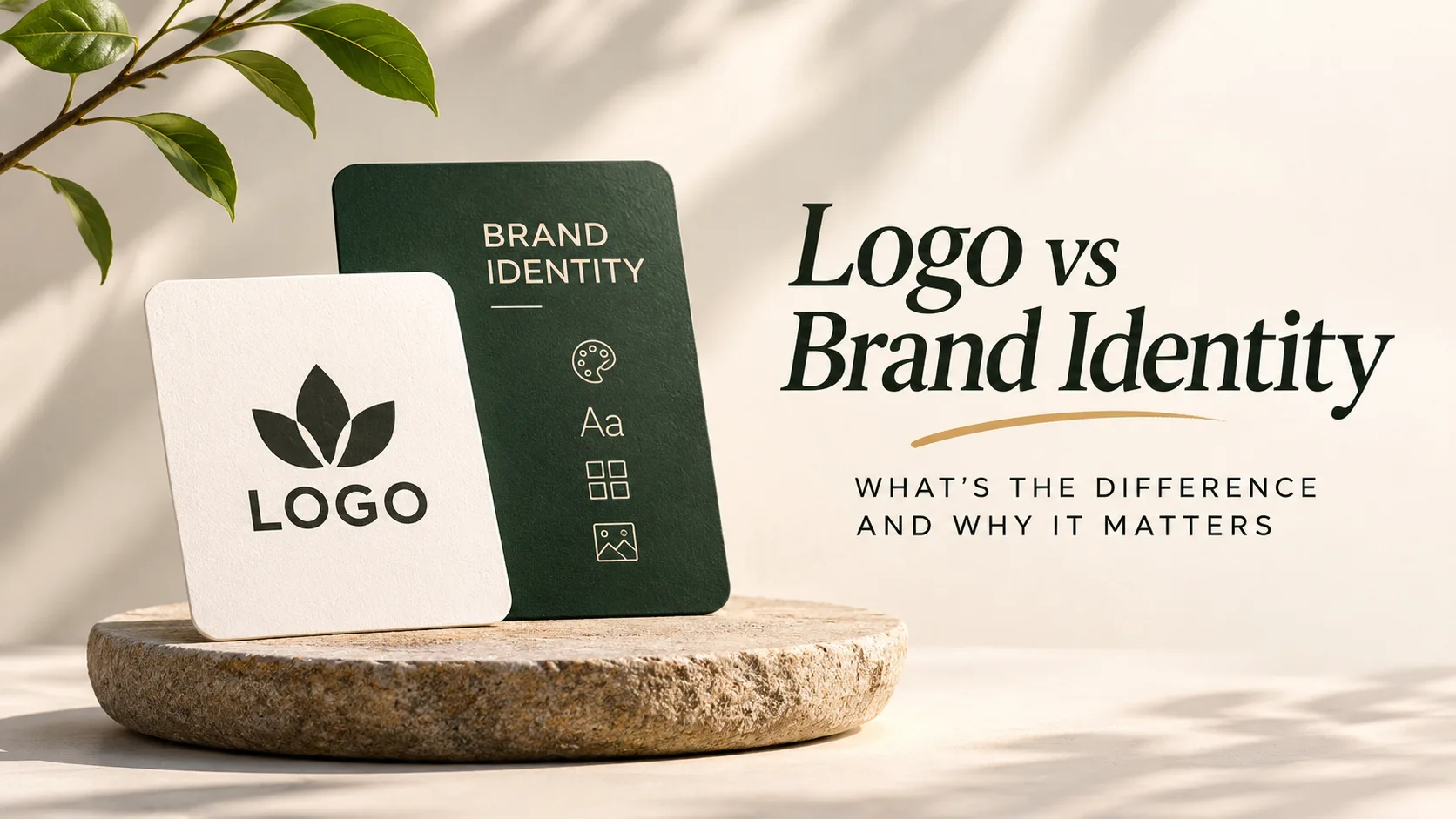
A logo is a single mark that identifies your business. A brand identity is the complete visual system around it: the logo and its variations, colours, typefaces, imagery style, tone of voice and the rules for using them across your website, stationery and social media. Most small businesses need more than a logo but less than a large corporate brand book: a logo set, a defined palette and fonts, a few templates, and a short one-page guide.
What a logo is, and what it is not
A good logo is simple, recognisable and works at every size, from a favicon on a browser tab to a sign board. But a logo alone does not tell your team which colours to use on a brochure, what font goes on a quotation, or how social media posts should look. Without those decisions, every new design is made from scratch, and the business starts to look inconsistent.
What a brand identity includes
The logo set
- Primary logo for most uses
- Horizontal and stacked versions for wide and narrow spaces
- Icon or symbol for profile pictures, favicons and app icons
- Single-colour and reversed versions for dark backgrounds, stamps and engraving
Colour palette
Primary and secondary colours with exact values for screen (HEX, RGB) and print (CMYK), so the same blue looks the same on your website and your letterhead.
Typography
One or two typefaces for headings and body text, with fallbacks for everyday tools such as Word, Google Docs and email.
Imagery and graphic elements
Guidance on photography style, icons, patterns or shapes that make your designs recognisable even when the logo is small.
Tone of voice
How the business sounds in writing: formal or friendly, technical or simple. This keeps the website, brochures and social posts consistent.
Usage guidelines
A short document showing clear space around the logo, minimum sizes, and what not to do, such as stretching, recolouring or placing the logo on busy photos.
What a small business actually needs
You do not need a 60-page brand book. A practical starter identity covers:
- A logo set in all the formats above, delivered as vector files (SVG, PDF or AI) and PNGs
- A colour palette and font pair
- A one- or two-page brand guide
- Templates for what you use every week: business cards, letterhead, email signature, social media posts and a presentation or quotation layout
You can add brochures, packaging, signage and a fuller guide as the business grows.
Signs you need a full identity, not just a logo
- Your website, visiting cards and social posts each look different
- Staff or vendors keep asking which logo file or colour to use
- You are launching a new product, entering a new market or raising your prices
- Your old logo does not work on mobile screens or small sizes
How to brief a designer
Share what the business does, who your customers are, three words you want people to associate with you, competitors you want to stand apart from, and where the brand will appear most. Ask for the final files, not just images, and confirm that you will own the artwork and its rights once the project is complete.
How we approach branding
Our corporate branding work starts with the logo set and builds the palette, typography and templates around it, then applies them to business cards, letterheads, brochures, the website and social media. See how this came together for Vidyut Energies.
Frequently asked questions
Can I get a brand identity built around my existing logo?
Yes. If the logo is still working, a designer can tidy it up, create the missing variations and build the colours, fonts and templates around it. This costs less than starting over and keeps the recognition you have built.
Which logo file formats should I receive?
Ask for vector files (SVG, PDF or AI) for print and signage, PNGs with transparent backgrounds for digital use, and a square icon version for social media profiles and favicons. Get each in full colour, single colour and reversed.
How long does a brand identity project take?
It depends on how many concepts and revision rounds are included and how many templates you need. A focused small-business identity is usually much quicker than a full corporate brand system. Ask for a timeline with clear review points before you start.